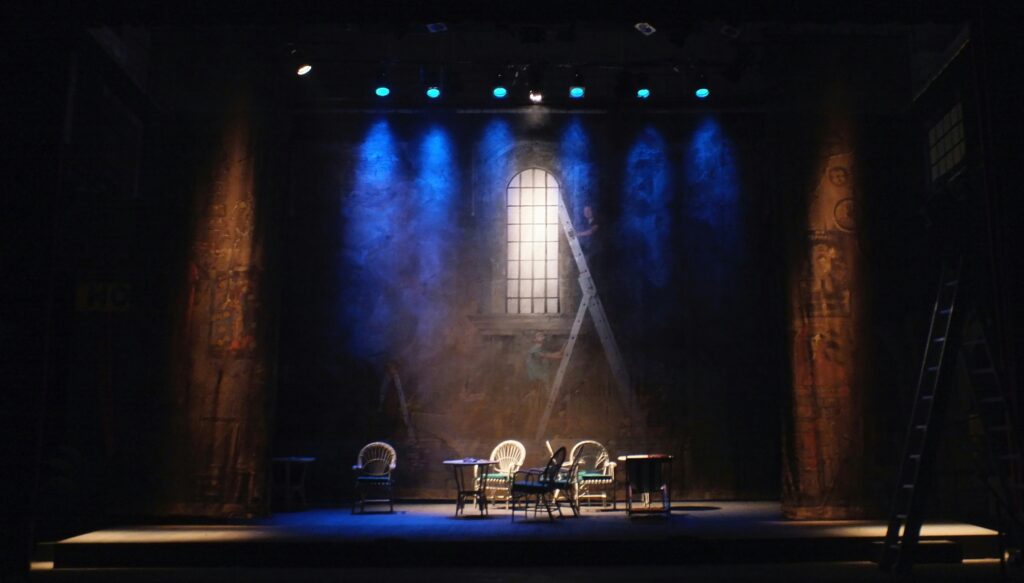
On my off days, I trade my day job for a stage. I do improvisational theatre, or improv.
In improv, my teammates and I take a suggestion from the audience. Then we build a story on the spot. There is no script. Whatever happens, we work with it.
It sounds like play, and in many ways it is. But it also asks a lot of you. You need creativity to make something out of nothing. You need critical thinking to see where a scene is going. You need communication, because you and your partner need to be on the same page. And you need collaboration, because no scene works if you try to carry it alone.
The longer I did improv, the more I noticed something. I was using the same four skills at work.
Starting out: Building on what I was given
My career began in development policy research. I spent almost five years at the Philippine Institute for Development Studies (PIDS). I evaluated government programmes and wrote evidence-based policy recommendations.
I did not come in as an economist. My background in economic research was limited. I was surrounded by some of the best economists in the country, and I knew it.
Improv has a basic rule: “Yes, and”. You can also translate this to mean — listen, then build on what you are given. That is what I tried to do. I listened to my mentors. I stayed open. I was willing to learn. Over time, they taught me to think critically and to look for creative answers to hard policy problems. PIDS gave me my foundation in research and writing, and a solid grasp of how the development research works.
Diplomacy: The scene keeps changing
From research, I moved to the U.S. Embassy in Manila. My job was to advance economic goals that served both the Philippines and the United States. I wrote economic reports and cables. I built relationships. I planned bilateral engagements and helped set up partnerships between government and the private sector.
Diplomacy does not always follow a script — no matter how hard you plan. Priorities shift. New people join the conversation. Diplomats cycle in and out. Plans change at short notice. So I brought the same attitude I had on stage. I stayed flexible, used what I had, and kept the scene moving.
Improv and diplomacy might seem an odd pair. But both depend on open communication and real collaboration. In both, you are telling a story with other people. In diplomacy, that story is about the relationship between two nations.
Why the two belong together
International affairs is a crowded stage. There are many actors, and most of them are not following your script. No one controls the whole scene.
That is why I think improv is good training for this field. It teaches you to stay calm when the unexpected happens. It teaches you to listen before you speak. And it reminds you that the best outcomes are rarely built alone.
This is also why I wanted to study international affairs more seriously. I wanted more tools to make sense of a world that keeps changing, and the chance to learn alongside people from other countries. At the time, my plan was to build a career in diplomatic missions or multilateral institutions, and to advance key policy goals.
I am still learning. But a little improvisation has taken me further than I expected.
***
This post is adapted from the personal statement I wrote when applying for a scholarship and admission to the Master in International Affairs programme at the Lee Kuan Yew School of Public Policy.